AUPWIT Wraps Up ALUMINIUM 2026 in Düsseldorf
13 October, 2026


If you run a machine shop, you know the drill. Every drilling, milling, or turning operation leaves behind a pile of scrap metal in various shapes and sizes. Some of it comes off as fine dust, some as long, springy coils, and some as sharp, jagged chips. Collectively, this material is called swarf.
While it may look like just another cleanup chore, how you manage that swarf has a direct impact on your workplace safety, your scrap revenue, and your operating costs.
This guide walks you through what swarf actually is, the different forms it takes, why it deserves more attention than a broom and a bin, and what equipment options are available to turn it from a liability into a recoverable resource.
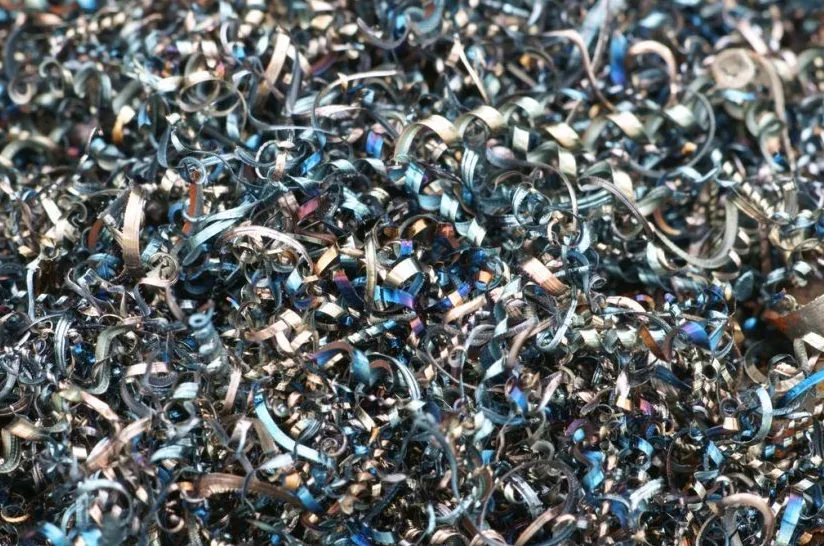
Swarf is the metallic scrap, chips, filings, and dust that remain after machining operations like turning, milling, drilling, or grinding. If you work in a machine shop, you see it every day: piles of metal scrap, curly ribbons, and fine dust building up around your lathes and mills. That mess has a name: swarf.
Swarf is also called chips, turnings, filings, or shavings. In our world, it specifically means the metal that curls or flies off a workpiece under a cutting tool. And it does not all look the same. You might get fine, gritty particles from grinding, powder-like dust from milling, or those long, springy, coiled strips that come off a lathe.
The term itself goes way back. In Middle English, “geswearf” meant iron filings or rust; in Old Norse, “svarf” referred to metallic dust. But whatever you call it, one thing holds true across every shop: swarf is an unavoidable part of metalworking. And more importantly, how you handle that swarf directly affects your bottom line, your team’s safety, and your environmental footprint.
Swarf is generated whenever a cutting tool bites into a workpiece and removes material. The usual suspects, including drilling, milling, turning, grinding, and boring, all produce it. In a lot of cases, the amount of metal you end up cutting away is surprisingly large. Industry estimates put it at up to 80% of the starting billet turning into swarf.
The specific shape and size of your swarf depend on a few moving pieces: the metal you are cutting, the geometry of your tool, your feed rates, cutting speeds, and whether you are using coolant or lubricant. Getting a handle on these variables is your first real step toward managing swarf instead of just putting up with it.
But here is the catch: swarf is not a one-size-fits-all problem. The form it takes tells you a lot about your process and, more practically, dictates the best way to collect and process it.
You can find swarf made from just about any metal you can machine: aluminum, brass, copper, iron, stainless steel, steel, titanium, and more. What the material is matters, not just for what a recycler will pay you, but also for fire safety. Some metals are far more reactive than others.
There is also the contamination factor to think about. Swarf almost always carries cutting fluids, lubricants, or oxides on its surface. That contamination affects both how easily you can recycle the scrap and how much of that expensive coolant you can recover.
Swarf management matters because neglecting it hits your operation in three places at once: safety, profit, and compliance. So now you know what swarf is and what forms it takes. But why go beyond just sweeping it into a drum? Let us break down the real costs of leaving it untreated.
Let us be blunt: loose swarf is genuinely dangerous, not just an eyesore.
Beyond keeping people safe, there is a hard-nosed financial reason to manage swarf better. That metal you are cutting away, you already paid for it as solid stock, and it still has genuine scrap value. But here is the rub: loose, oily swarf straight out of the machine gets a much lower price from scrap dealers than clean, compacted briquettes or bales.
And the losses do not stop at scrap value. Poor handling gums up your chip conveyors, accelerates tool wear, and takes up expensive floor space. It also adds weight and volume to your waste disposal bills. In plain terms, inefficient swarf handling is a direct drag on your monthly profit margin.
On top of cost and safety, regulators are paying closer attention. Many jurisdictions restrict landfilling oil-contaminated swarf. At the same time, big customers are increasingly asking about your sustainability numbers. Good swarf management is not just a nice-to-have anymore; it is becoming a must-have for staying in business.
With all those risks and costs in mind, the natural next question is: what can you actually do about it? This is where the right hydraulic equipment comes into play. The goal is to turn that messy, oily scrap into a clean, transportable, and valuable commodity.
Briquetting is one of the most effective tools in the swarf handler’s arsenal. A briquetting press takes loose chips, turnings, and fines and squeezes them under high pressure into dense, solid pucks or bricks.

Why briquette? For a few very practical reasons:
The typical cycle works like this: swarf feeds into a pre-charge chamber, the machine squeezes out the fluid, a main ram compresses the material into its final form, and the finished briquette drops out the front, ready for a furnace or a scrap bin.
Often, before you can briquette or bale that swarf, you need to break it down into smaller, more uniform pieces. Long, stringy turnings can wrap around augers and clog feed hoppers.
A shredder solves that. It chops oversized, tangled swarf into manageable granules, creating consistent feedstock that flows smoothly into the briquetter or baler. Think of it as the preparation step that makes everything downstream run without hiccups.
For shops or recycling centers dealing with very high volumes, balers offer another powerful compaction option. Both horizontal and vertical balers are commonly used. They compress not just swarf but also mixed light scrap into dense, rectangular bales that are easy to stack, store, and ship to steel mills or foundries.
Shears, meanwhile, handle the bulky stuff. They cut oversized scrap, such as heavy plate offcuts or large structural sections, down to specified dimensions. This prepares oversized material for feeding into a shredder or baler, ensuring nothing is too big to process.
Equipment gives you the muscle, but good daily habits make it all work. Let us shift from the machines themselves to the ground-level practices that keep your swarf system safe and efficient.
First and most important: do not mix your metals. Keep steel separate from aluminum, brass, copper, and stainless. It might seem like extra work, but mixing alloys reduces the price recyclers will offer you, and it makes their job, and your resale value, a lot harder.
You should also separate wet swarf from dry swarf. Wet material contains recoverable fluids; dry material does not. Mixing them muddies the water, literally, and complicates your fluid recovery.
Efficient collection is about saving labor and reducing mess. A few practical moves go a long way:
Let us be honest: coolant is not cheap. Every liter that clings to your swarf and ends up in the dumpster is money down the drain. A centrifuge or briquetting press can recover a significant portion of that fluid and put it right back into your sump.
Also, do not overlook filtration. Running your recirculating coolant through a filtration system removes fine swarf particles, which extends the life of your coolant, improves surface finish on your parts, and reduces bacterial growth.
Handling swarf safely means wearing the right gear: safety goggles, protective sleeves, aprons, and safety-toe shoes. Gloves are a bit of a double-edged sword. They protect your hands from sharp edges when you are cleaning up, but you should never, ever wear them while operating rotating machinery. The risk of a glove getting snagged and pulling your hand into a spindle is just too high.
When it comes to fires, metal swarf plays by different rules than wood or paper.
The bottom line is this: swarf is not just waste to be hauled away. It is a recoverable resource. When you handle it right, here is what you actually get:
Aupwit has been a professional manufacturer of hydraulic machinery since 2008, focusing on briquetting presses, metal balers (horizontal and vertical), shredders, and metal shears. Our equipment is built to help machine shops and recyclers turn swarf from a costly headache into a steady profit stream.
Whether you need a briquetter to recover fluids and produce furnace-ready pucks, a baler to pack high volumes, or a shredder to tame long turnings, we can put together a system that fits your operation. Get in touch with us to talk through your specific needs; we will help you figure out the most practical way to get your swarf under control.


This website uses cookies to improve your experience while you navigate through the website. Out of these, the cookies that are categorized as necessary are stored on your browser as they are essential for the working of basic functionalities of the website.
We also use third-party cookies that help us analyze and understand how you use this website. These cookies will be stored in your browser only with your consent. You also have the option to opt-out of these cookies. But opting out of some of these cookies may affect your browsing experience.